


A damp patch on the wall. A faint musty smell that won’t go away. A water bill that’s crept up for no obvious reason. On their own, these things are easy to brush off. Together, they’re often the first sign of a water leak hiding inside your wall.
Wall leaks are sneaky. Unlike a burst pipe or an overflowing toilet, they don’t always announce themselves. Water can travel behind plasterboard, brickwork, or tiles for weeks – sometimes months – before it becomes obvious. By the time you can see the damage, it’s often already done more than you’d expect.
Here’s how to spot the signs early, what typically causes it in Brisbane homes, and how it gets found and fixed without your walls needing to come apart.
Signs You Might Have a Water Leak in Your Wall
Some of these signs are obvious. Others are easy to miss until you know what you’re looking for.
- Damp or discoloured patches — Yellow, brown, or dark staining on paint or wallpaper, especially if it spreads slowly over time
- Peeling paint or bubbling plaster — Moisture trapped behind the surface pushes paint and plaster away from the wall
- A musty or damp smell — Often noticeable before any visible staining appears, particularly in built-in wardrobes or behind furniture
- Soft or spongy wall sections — Press gently on plasterboard; a leak-affected area often feels different to the surrounding wall
- Visible mould — Small black or green spots, particularly near skirting boards, corners, or around windows
- An unexplained rise in your water bill — If nothing about your usage has changed but the bill has gone up, a hidden leak is one of the more common explanations
- The sound of running water — Faint trickling or dripping when every tap in the house is off
- Warped skirting boards or flooring — Timber swells and distorts when it’s absorbed moisture over time
If you’re noticing more than one of these at once, it’s worth getting it looked at rather than waiting to see if it gets worse.
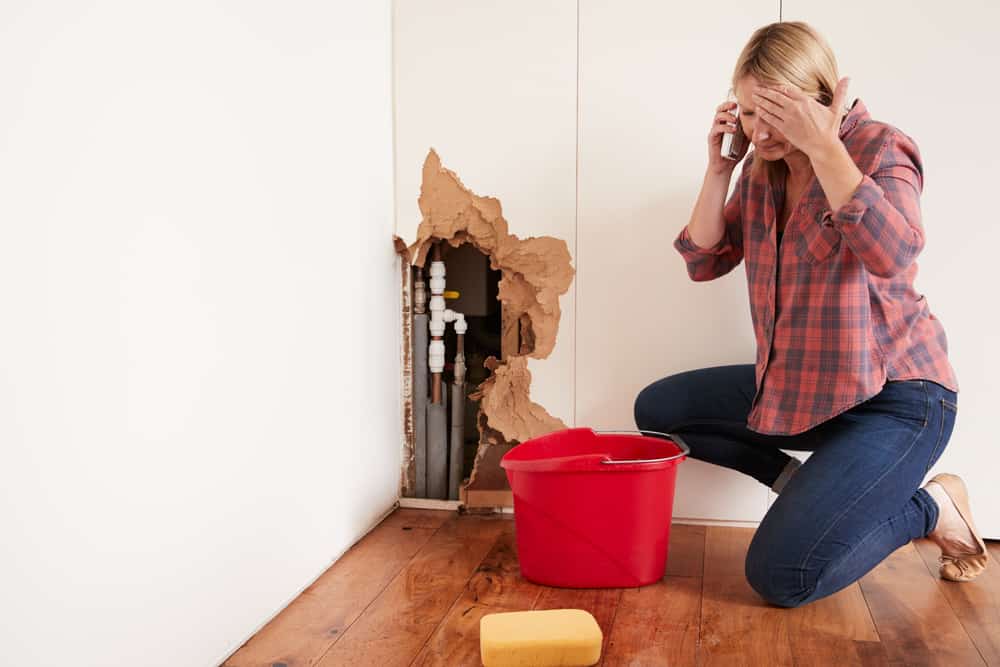
What Causes a Water Leak in a Wall?
A leak inside a wall cavity is almost always coming from somewhere specific. Common causes include:
- Ageing or corroded pipework — Many older Brisbane homes still have original copper or galvanised pipes, which become more prone to corrosion and pinhole leaks over time
- Failed shower or bathroom waterproofing — A common source, particularly in older bathrooms where waterproof membranes have degraded or were never properly installed
- Pipe joints under pressure — Fittings and joints are the weakest point in a plumbing system and often the first place a leak develops
- Storm and weather damage — Brisbane’s storm season can drive water into small cracks or gaps in external walls, particularly around window and door flashings
- Ground movement — Reactive clay soils, common across parts of Brisbane, can shift slightly with seasonal moisture changes, placing stress on pipe joints behind walls
In many older Queenslanders and brick veneer homes built from the 1960s to 1980s, ageing pipework is often the underlying cause; the plumbing simply wasn’t built to last forever, and decades of wear eventually catch up.
Why You Shouldn’t Wait on a Wall Leak
It’s tempting to leave a small damp patch and see if it dries out on its own. In Brisbane’s humid climate, that’s a risk that tends to backfire.
- Mould can develop quickly — Warm, humid conditions are exactly what mould needs to take hold, and once it’s established in a wall cavity, it’s far harder to remove
- Timber framing can rot — Structural timber exposed to ongoing moisture weakens over time, which can turn a plumbing fix into a much bigger repair job
- It can attract termites — Damp timber is more appealing to termites, a genuine risk across South East Queensland
- The damage compounds — What starts as a small, cheap fix can become a wall replacement if left unaddressed for months
The earlier a leak is found, the smaller (and cheaper) the fix tends to be.
How We Detect a Leak in Your Wall (Without Breaking It)
The idea of a plumber needing to cut into your wall to find a leak puts a lot of people off calling. The good news: it’s rarely necessary.
Our team uses a combination of non-invasive detection tools to pinpoint exactly where a leak is coming from before any wall is touched:
Acoustic listening devices
Water escaping under pressure creates a distinct sound, even behind brick or plasterboard. Acoustic equipment picks this up and helps narrow down the leak’s exact location.
Thermal imaging cameras
Moisture changes the surface temperature of a wall in ways the naked eye can’t detect. Thermal cameras reveal these variations, showing us where water is moving behind the surface.
Moisture meters
These measure the moisture level within a wall directly, confirming both the presence and the extent of a leak without needing to cut anything open.
CCTV drain cameras
For leaks connected to underground pipework or drainage near a wall, drain cameras let us inspect the pipe from the inside, identifying cracks, joint failures, or blockages contributing to the leak.
Together, these tools mean we can usually locate a wall leak accurately in a single visit – without the guesswork and without unnecessary damage to your home.
A Simple Check You Can Do Before You Call
If you suspect a leak but aren’t sure, there’s a basic test you can run yourself before booking a plumber:
- Turn off every tap and water-using appliance in the house
- Locate your water meter and take a reading
- Wait two hours without using any water
- Check the meter again
If the reading has moved despite no water being used, there’s a good chance you have a leak somewhere in the system. This won’t tell you exactly where the leak is, but it confirms whether it’s worth booking a professional inspection.
What Happens When You Call D&S Plumbing Group
If you’re noticing signs of a wall leak, our leak detection team can find the source and get it repaired properly — with minimal disruption to your home.
- Same-day service — We aim to locate and repair leaks the same day wherever possible, since a delayed fix only gives the leak more time to cause damage
- Non-invasive detection equipment — Acoustic listening devices, thermal imaging, and CCTV drain cameras mean we find the leak first, rather than cutting into walls to search for it
- Over a decade of experience — Our team has handled everyday leak repairs through to complex commercial plumbing issues across Brisbane
- Whatever the source — Whether it’s a water supply leak, a stormwater issue, or a sewer leak, we identify the cause and fix it at the source

Close-up of a drop of water creating ripples on a flooded bathroom floor, with a toilet and tiled wall in the background.
Frequently Asked Questions
How do I know if I have a water leak in my wall?
Look out for damp or discoloured patches, peeling paint, bubbling plaster, a musty smell, visible mould, or an unexplained increase in your water bill. If you notice a combination of these, it’s worth having a plumber investigate.
Can a plumber find a leak without breaking the wall?
Yes. Modern leak detection uses acoustic listening devices, thermal imaging cameras, and moisture meters to locate a leak’s exact position without needing to cut into the wall first. In most cases, only the confirmed leak point needs to be accessed for the repair itself.
How much water can a hidden wall leak waste?
Even a small, slow leak can waste a significant amount of water over weeks or months, often showing up as a steadily rising water bill well before any visible damage appears.
Is a wall leak an emergency?
Not always, but it shouldn’t be ignored. A slow leak can typically wait for a scheduled appointment, while a fast-flowing leak, or one causing visible water pooling, should be treated as urgent. If you’re unsure, contact our team and we can advise.
Can a wall leak cause mould?
Yes, and in Brisbane’s humid climate this can happen faster than many homeowners expect. Persistent moisture inside a wall cavity is one of the most common causes of hidden mould growth in the home.
What’s the first thing I should do if I suspect a wall leak?
Turn off all taps and appliances, check your water meter over a couple of hours, and if it’s moved, book a professional inspection. Avoid trying to open the wall yourself; this can spread the damage rather than resolve it.
Think You Have a Leak in Your Wall?
Don’t wait for a small damp patch to become a much bigger repair. Our team can locate the source quickly using non-invasive detection equipment and get it fixed properly, the first time.
Contact our team or call 07 3254 8221 to book a leak detection inspection.